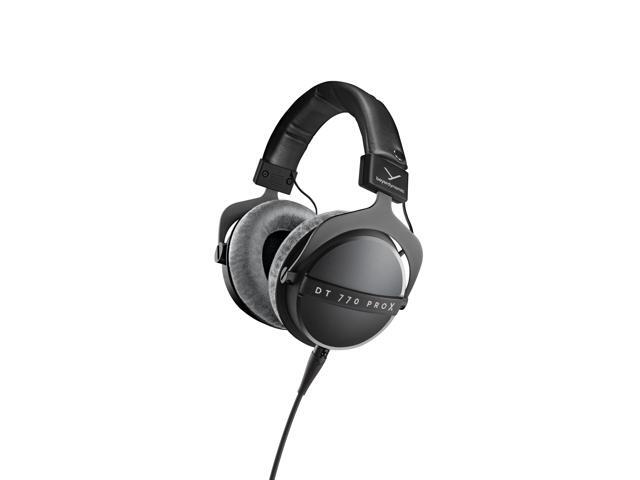
The DT 770 Pro, Rebuilt From the Inside
Beyerdynamic has sold the DT 770 Pro since 1985. Forty years. Studios worldwide use them. Podcasters, streamers, and musicians swear by them. But the original had two problems that persisted through every revision: a permanently attached cable that eventually failed, and impedance options (80 or 250 ohm) that made portable use awkward without a headphone amp.
The DT 770 Pro X fixes both. The cable is now detachable via Mini-XLR. The impedance dropped to 48 ohms. And the driver is entirely new, a 45mm unit Beyerdynamic calls STELLAR.45. This isn’t a facelift. It’s a rebuild that keeps the shell and rethinks the guts.
I’ve used the Pro X as my primary closed-back headphone for three months. Mixing sessions, gaming marathons, train commutes. Here’s what I found.
Sound Quality
The STELLAR.45 driver is the headline feature, and it delivers. Compared to the original DT 770 Pro 80 ohm that I used for years before this, the Pro X sounds tighter across the entire frequency range.
Bass: The low end is the biggest improvement over the original. The DT 770 Pro 80 had a bass bump that some people loved and others fought with EQ. The Pro X pulls the bass back to neutral without making it thin. Kick drums hit with definition. Bass guitars have note separation instead of a warm smear. Sub-bass extends down to 5 Hz on paper, and in practice the rumble is there without dominating the mix. For mixing, this is exactly what you want. For casual listening, the bass is satisfying without being exciting. If you want bass that thumps your skull, look elsewhere. If you want bass that tells the truth, this is it.
Mids: Vocals and instruments sit forward in a natural way. I ran several mix sessions comparing the Pro X against my studio monitors, and the midrange translation was almost 1:1. Acoustic guitars had the right amount of body. Snare drums cracked without sounding papery. The upper mids around 2 to 4 kHz, where a lot of headphones get harsh, stay smooth on the Pro X. That’s a big deal for long sessions.
Treble: This is where Beyerdynamic’s reputation gets complicated. The original DT 770 Pro had a pronounced treble peak around 8 kHz that could be fatiguing. The Pro X tames this significantly. Detail and air are still there. Hi-hats sizzle, cymbal decays are natural, and you hear the room in recordings. But the harshness is gone. I’ve done five hour mixing sessions without reaching for EQ or taking a break from ear fatigue.
Isolation
Closed-back headphones exist for one reason: keeping sound in and noise out. The DT 770 Pro X does this well. Not at the level of active noise cancelling headphones, but passive isolation is consistent and reliable with no batteries to charge and no processing artifacts.
On a commuter train, the Pro X blocked enough ambient noise that I could listen at moderate volume without cranking things up. In the studio, bleed from a click track was minimal, even with the volume pushed for a drummer tracking takes. The leatherette ear pad covers seal tighter than the velour covers, so I use leatherette for isolation-critical situations and velour for comfort during long sessions at home.
The flip side of good isolation: you won’t hear someone talking to you. I’ve been startled by my wife appearing next to me more than once. That’s not a complaint about the headphones.
Comfort
At 350 grams, the Pro X is heavier than the Sennheiser HD 560S (240g) and heavier than the original DT 770 Pro (270g). You feel the extra weight during the first hour, then you stop noticing. The memory foam pads distribute pressure evenly, and the spring steel headband has enough give that it doesn’t create hot spots on top of your head.
The clamping force is moderate. Tight enough for a good seal with leatherette pads, loose enough that your jaw doesn’t ache after a session. My glasses sit fine under the pads without breaking the seal too badly, which is a common failure point for closed-back headphones.
Including both velour and leatherette pad covers was a smart move. Velour breathes better and feels softer for home studio use. Leatherette seals tighter for tracking and noisy environments. Swapping takes about 30 seconds per ear.
The Cable Situation
After decades of the fixed cable, the detachable Mini-XLR connection on the Pro X feels like it should have happened ten years ago. The connector locks securely into the left earcup with a satisfying click. No wobble, no accidental disconnects.
Including two cables (1.8m straight and 3m coiled) covers most scenarios. The straight cable is right for portable use and desk setups. The coiled cable works for studio environments where you need reach but don’t want slack everywhere. Both terminate in 3.5mm with a screw-on 6.3mm adapter.
Cable quality is solid. Flexible without being flimsy, with strain relief at both ends. And because it’s Mini-XLR, third-party cables are available if you want a custom length or a balanced connection for your audio interface.
Driving the Pro X
The 48 ohm impedance is the most practical improvement in the Pro X. The original DT 770 Pro came in 32, 80, and 250 ohm versions, each suited to different sources. The 80 ohm version ran adequately from most devices but left headroom on the table. The 250 ohm version sounded best but needed a proper amp.
The Pro X at 48 ohms runs comfortably from everything I tested. My iPhone, my MacBook, a Focusrite Scarlett 2i2, a standalone Schiit Magni. Volume was never an issue. The sound quality was consistent across sources, though the Scarlett and Magni had slightly better dynamics and bass control than the phone output. That’s expected.
The point is: you don’t need to plan your impedance choice anymore. One headphone works everywhere. That alone makes the Pro X a better buy than the original for anyone who uses headphones in more than one location.
Gaming
I don’t buy headphones for gaming, but I game in them. The Pro X handled spatial audio in Valorant and Helldivers 2 without any dedicated gaming features. Footstep positioning was accurate. The closed-back design kept my microphone clean from audio bleed, which matters for team communication.
Compared to the HD 560S, the Pro X has a narrower soundstage. That’s physics, not a flaw. Open-back headphones will always image wider. But the Pro X compensates with better isolation and more impactful low end. Explosions in the Pro X feel heavier. If you game in a noisy environment or share a room, the closed-back design is the right trade.
DT 770 Pro X vs the Original DT 770 Pro
If you already own a DT 770 Pro and it works fine, the upgrade question is about the cable. If your fixed cable is intact and you don’t need portability, the sound improvement alone might not justify replacing a working pair. The Pro X sounds better, but the original sounds good.
If your cable is failing (common after a few years), if you want one pair of headphones that works from your phone to your studio, or if you’re buying fresh: get the Pro X. The detachable cable, the lower impedance, and the refined tuning make it the better headphone in every measurable way.
Who Should Buy These
Studio engineers and producers who need honest closed-back monitoring. Podcasters and streamers who need isolation without active noise cancellation adding latency. Commuters and travelers who want audiophile-grade sound in noisy environments. Gamers who play in shared spaces and need their audio contained.
Skip these if you prioritize soundstage over isolation. Open-back headphones like the Sennheiser HD 560S will always win that contest. Also skip these if weight matters more than sound. At 350g, lighter options exist.
The Bottom Line
The DT 770 Pro X takes a studio legend and modernizes it without losing what made it legendary. The STELLAR.45 driver tightens the bass, smooths the treble, and keeps the midrange honest. The detachable cable and 48 ohm impedance solve the two biggest complaints about the original. Three months of daily use across mixing, gaming, and commuting, and I haven’t reached for another closed-back headphone once.
Beyerdynamic could have slapped a new name on the same drivers with a detachable cable and called it a day. They didn’t. The Pro X sounds meaningfully better than the headphone it replaces, and it works with everything you own. That’s a rare combination.