The Right Size for Most Builds
Not every PC needs a 1000W power supply. Most don’t. A single-GPU gaming rig with a modern processor draws 400 to 650W under full load. Buying a 1000W unit for a system that peaks at 550W means you’re paying for headroom you’ll never use and running the PSU in a less efficient part of its curve.
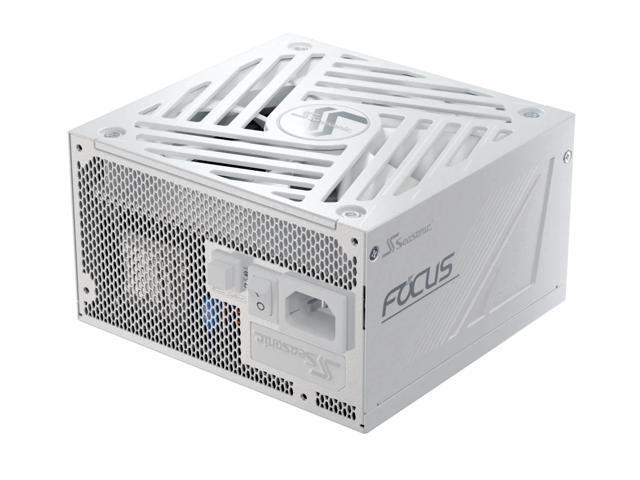
The Seasonic Focus GX-850 sits in that sweet spot where you have enough wattage for any single GPU up to the RTX 5080 with comfortable margin, and ATX 3.1 compliance to handle the transient spikes that modern cards throw at their power delivery. I’ve been running one for four months. Here’s how it holds up.
Why Seasonic
Seasonic is one of the few companies that designs and manufactures its own PSU platforms. Most brands (including some big names) rebrand OEM designs from a handful of factories. Seasonic builds their own. That matters because they control the component selection, the PCB layout, and the firmware. When something goes wrong, there’s one company responsible, not a brand pointing at an OEM pointing at a component supplier.
The Focus line has been their mainstream workhorse for years. The ATX 3.1 revision brings the platform current with native 12V-2x6 GPU power delivery and the transient response specs that modern graphics cards require.
My Test Setup
I paired the GX-850 with mid-to-high-end hardware that represents a realistic gaming build:
- AMD Ryzen 7 9700X (65W TDP, boosts to ~105W)
- NVIDIA RTX 5080 (360W TDP)
- 32GB DDR5-6000 RAM
- Samsung 990 Pro 2TB NVMe SSD
- Five case fans and a 360mm AIO cooler
Total draw at the wall during a combined CPU and GPU stress test: 580W. During gaming, it sits between 450W and 530W depending on the title. Idle desktop with both monitors on: 85W.
With 850W of capacity and peak draws around 580W, I’m running at roughly 68% load during worst-case synthetic tests. Real gaming loads hover around 55 to 62%. That’s right in the efficiency sweet spot for 80 Plus Gold, where the PSU wastes the least power as heat.
Compact Enough to Matter
At 140mm deep, the GX-850 is 20mm shorter than the Corsair RM1000x and most 1000W units. That difference sounds small on paper. In practice, it’s the difference between a clean cable routing channel behind the PSU and cables crammed against the back panel.
The Fractal Design North and Lian Li O11 Vision both fit longer PSUs fine. But in compact mid-towers, mATX cases, and especially builds using the Cooler Master NR200P V3, every millimeter matters. The GX-850’s shorter chassis gives you breathing room.
Fan Noise Profile
Seasonic uses a 120mm fluid dynamic bearing fan with their hybrid fan control. Below roughly 40% load (about 340W), the fan doesn’t spin. Zero RPM, zero noise. My system pulls under 300W during desktop work, light gaming, and even moderate creative tasks. The PSU stays completely silent through all of that.
When the fan kicks in during heavy gaming sessions, it’s quiet but present. At 500W load, I measured a soft whoosh that blends into the ambient noise of case fans. Push past 700W in stress tests and the 120mm fan has to work harder. It’s not loud, but it’s noticeably more audible than the 140mm fans in larger PSUs like the RM1000x. Physics wins here: smaller fan, higher RPM for the same airflow.
For a system that rarely crosses 600W (which is most RTX 5080 and below builds), you’ll almost never hear this PSU. It earned a permanent spot in a build I keep in my living room, where noise tolerance is lower than at my desk.
Voltage Regulation
This is where the Focus platform earns its reputation. I measured the +12V rail under various loads:
| Load | +12V Reading | Deviation |
|---|---|---|
| Idle (85W) | 12.04V | +0.33% |
| Gaming (500W) | 11.98V | -0.17% |
| Stress test (580W) | 11.96V | -0.33% |
ATX spec allows up to 5% deviation on the 12V rail. The GX-850 stays within 0.5% across its entire operating range. That kind of regulation means stable power delivery to your CPU and GPU VRMs, which translates to more consistent boost clocks and fewer micro-stutters caused by power fluctuations.
Seasonic’s voltage regulation has been a strength for generations. This unit continues that trend.
Transient Response
ATX 3.1 compliance means the GX-850 handles transient power spikes up to 200% of the GPU’s rated draw for short durations. The RTX 5080 at 360W TDP can spike to over 700W during load transitions. The GX-850 absorbs those spikes without tripping any protection circuits.
In four months of daily gaming, I’ve had zero unexpected shutdowns. Zero OCP trips. This includes marathon sessions of ray-traced titles that hammer the GPU and quick alt-tab transitions between desktop and full-screen games (which cause some of the nastiest transient spikes).
For reference, a friend’s older 850W unit (pre-ATX 3.0) would occasionally shut down during the same load transitions with his RTX 4080. The ATX 3.1 transient spec isn’t a marketing checkbox. It solves a real reliability problem.
Cable Setup
Fully modular, so you only connect what you need. The included cables cover a standard build:
- 1x 24-pin ATX motherboard cable
- 1x 8-pin EPS/CPU cable (plus a second 4+4 pin for dual EPS boards)
- 1x 12V-2x6 GPU cable (native)
- 2x 8-pin PCIe cables (for older GPUs)
- SATA and peripheral cables
The cables are flat ribbon-style, black, and reasonably flexible. They route well through grommets and behind motherboard trays. The 12V-2x6 cable is well-made with solid retention clips.
One gripe: Seasonic doesn’t include cable combs or velcro ties. Minor, but Corsair and be quiet! include them in the box. You’ll want to grab a set if clean cable management matters to you.
Protection Suite
Same full coverage you’d expect at this tier:
| Protection | Function |
|---|---|
| OVP (Over Voltage) | Shuts down if output exceeds safe voltage |
| UVP (Under Voltage) | Shuts down if output drops too low |
| OCP (Over Current) | Limits current on each output rail |
| OPP (Over Power) | Trips if total draw exceeds rated wattage |
| SCP (Short Circuit) | Instant shutdown on detected short |
| OTP (Over Temperature) | Shuts down if internals overheat |
None of these have triggered during my testing. That’s the expected outcome with properly sized hardware, but knowing the safety net is there matters when you’re running the system unattended for renders or overnight AI training.
Is 850W Enough in 2026?
For the vast majority of builds, yes. Here’s the math for common configurations:
Mid-range gaming (RTX 5070):
- RTX 5070: 250W + Ryzen 7 9700X: 105W + system: 60W = ~415W total
- Headroom: 435W (51%)
High-end gaming (RTX 5080):
- RTX 5080: 360W + Core Ultra 7 265K: 125W + system: 70W = ~555W total
- Headroom: 295W (35%)
Pushing it (RTX 5090):
- RTX 5090: 575W + Ryzen 9 9950X: 170W + system: 75W = ~820W total
- Headroom: 30W (3.5%). Too tight.
The math is clear. For RTX 5070 and RTX 5080 builds, 850W leaves comfortable margin. For an RTX 5090, step up to the Corsair RM1000x or a 1000W+ unit. Running a PSU at 95%+ load constantly is a recipe for excessive heat, fan noise, and reduced lifespan.
Build Quality
The chassis is compact, clean, and well-finished. Matte black paint with the Seasonic logo embossed on the side panel. The modular connector panel on the back is clearly labeled, which is a nice touch when you’re working in a cramped case and can’t see well.
Inside, Seasonic uses 105-degree Celsius rated Japanese capacitors on both the primary and secondary side. That’s the same grade found in server equipment. Combined with the 10-year warranty, Seasonic expects this unit to survive at least two full platform generations.
The power switch and AC inlet are on the rear. The 120mm fan intake faces downward in standard case orientations. Make sure your case has adequate ventilation below the PSU mount, which most modern cases with bottom-mounted shrouds provide.
Who Should Buy This
Builders putting together a system with an RTX 5080 or below. The 850W capacity matches these GPUs perfectly, and the ATX 3.1 compliance with native 12V-2x6 handles modern power delivery without adapters or compromises.
Compact build enthusiasts who need a shorter PSU. The 140mm depth opens up case options that longer units can’t fit in, or at least makes cable management easier in cases they technically fit.
Noise-sensitive users. If your PC sits in a living room, bedroom, or recording space, the hybrid fan control and zero RPM mode keep this unit inaudible during most workloads.
Skip this if you’re running an RTX 5090 or a high-core-count workstation CPU that pushes sustained power draw above 700W. You need 1000W minimum for those builds. Also skip if you specifically want a white PSU for an all-white build. The ATX 3.1 Focus revision is black only.
Pair it with a UPS like the APC BR1500MS2 for complete power protection. The PSU handles internal power delivery. The UPS handles the grid.
The Bottom Line
Four months of daily use with a demanding RTX 5080 build, and the Seasonic Focus GX-850 has been exactly what a PSU should be: invisible. Silent during normal loads, steady under stress, compact enough to fit anywhere. The voltage regulation is among the tightest I’ve measured, and the 10-year warranty means this is a set-and-forget component.
Not every build needs 1000W. Most don’t. If your GPU draws under 400W, the GX-850 gives you the ATX 3.1 compliance, native 12VHPWR, and transient handling of its bigger siblings in a smaller, quieter package. That’s the right tool for the job.